


News and Articles
Business Continuity : Preparing IT Systems and Alternate Worksites for Emergencies
03 November 2026
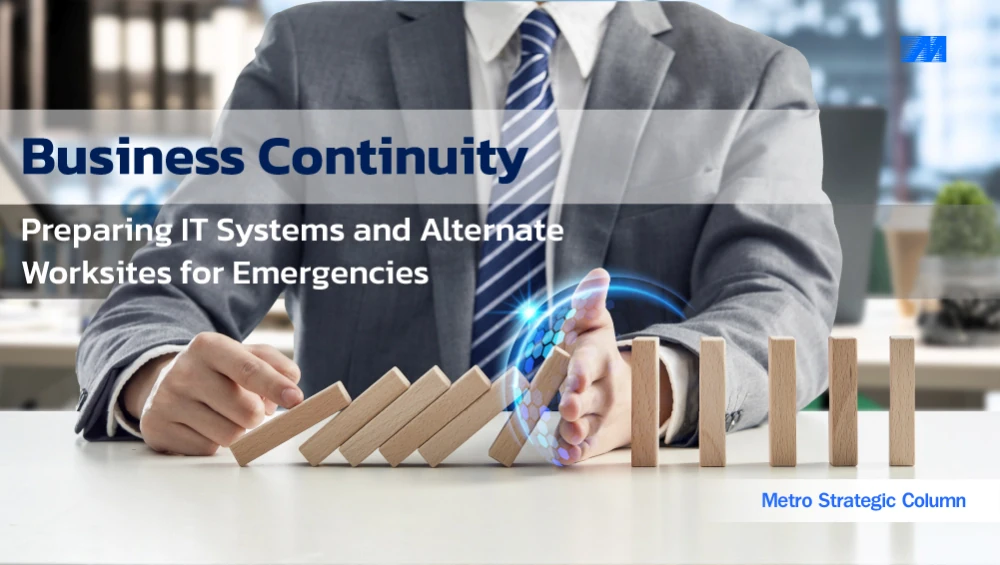
What happens when your IT systems or primary office become unavailable?
Floods, earthquakes, or other unexpected events can make primary offices inaccessible. How does your business keep going?
If employees can't access critical systems or serve customers on time, the impact on business operations can escalate quickly. These events can happen with little warning, and their consequences may be greater than expected. Having data backups or remote work arrangements in place helps, but it doesn't mean an organization is prepared for every scenario.
That's why Business Continuity is about more than backing up data or having an IT recovery plan. It means considering your people, workplaces, and most important business processes together, so essential operations can continue or resume within defined timeframes when something goes wrong.
When Your Primary Office Becomes Unavailable,What Happens to the Business
The risks aren't limited to damaged buildings or IT equipment. Disruptions can also affect business processes that depend on multiple systems and teams working together.
Here ‘s what organizations may face:
- Access to critical IT systems is disrupted. Employees may be unable to use ERP systems, databases, or applications essential to daily operations.
- Employees may be unable to access their primary workplace. Some business functions still require dedicated workspaces, equipment, or specific working environments.
- Customer services may be affected. Order processing, service delivery, and customer communications may be delayed.
- Recovery times become uncertain. Without clear procedures and backup resources, restoring normal operations may take longer than expected.
So the real question isn't just, "Are our systems backed up?" It's also about which business functions must continue if the primary office becomes unavailable, who is responsible, and which systems and locations will support those operations.
How to Prepare an Effective Business Continuity Plan?
A Business Continuity Plan (BCP) is an important part of organizational preparedness, but only if it's supported by resources and procedures that can be put into action during a real incident.
Here are four key areas to focus on:
1. Identify Critical Systems and Business Processes
Start by identifying which systems and processes are essential to your business, such as transaction processing systems, ERP platforms, customer service applications, and internal communications.
A Business Impact Analysis (BIA) helps organizations prioritize critical functions, understand the potential impact of disruptions, and determine how much downtime the business can tolerate.
2. Plan Disaster Recovery for Critical IT Systems
Backups are only part of the picture. If primary systems become unavailable, organizations need a clear plan to restore the systems and data required to resume operations
Effective Disaster Recovery (DR) planning should establish two important recovery objectives:
- Recovery Time Objective (RTO): The target time for restoring a system or service after a disruption.
- Recovery Point Objective (RPO): The maximum acceptable period of data loss following a disruption
Together, these objectives help organizations align their backup and recovery strategies with the importance of each system to the business.
3. Have an Alternate Worksite Ready
Many organizations support remote work, but some business processes still require a physical workspace, specialized equipment, or reliable network connectivity.
An Alternate Worksite helps address this need, particularly for teams that must maintain essential operations, such as contact centers, operations teams, and departments that rely on specialized business systems.
Organizations should plan ahead for how many employees need workspace, what facilities and equipment are required, how the site will connect to critical systems, and how teams will move their operations when necessary.
4. Test the Plan and Rehearse the Response
Having backup systems and an alternate site doesn't mean an organization can switch operations immediately. Without clear procedures and proper preparation, recovery efforts may face unexpected delays.
Regular BCP and DR testing helps organizations assess system readiness, team coordination, and procedures for relocating operations. It also helps identify gaps that can be addressed before an actual emergency.
Lessons from Real Events: Why a Ready Recovery Center Matters
Thailand's past crises show that business risks can take many forms, from restricted access to office buildings to natural disasters that affect workplaces and surrounding areas.
The following examples highlight how DBCS, the Disaster Recovery center and Alternate Worksite operated by Metro Systems Corporation Public Company Limited (MSC), has supported customers during different situations.
Political Demonstrations in 2010
When access to offices in Bangkok's Silom and Sathorn business districts was disrupted, more than 10 companies in the affected areas used the recovery center to maintain operations while access to their primary offices was restricted.
- Major Floods in 2011
While widespread flooding affected many parts of Thailand, MSC's recovery center remained unaffected and continued operating as normal.
- COVID-19 Pandemic
During the COVID-19 pandemic, DBCS provided alternate workspace facilities with more than 300 seats to support customers' operational needs during the outbreak.
- Earthquake in 2025
Following the earthquake in Myanmar that was also felt in Thailand, the recovery center remained unaffected and continued serving customers as usual.
- Heavy Rainfall and Flooding in Bangkok
During periods of heavy rainfall and flooding across several areas of Bangkok, the recovery center remained unaffected and continued providing services to customers around the clock.
These experiences show the importance of having backup facilities ready when emergencies occur. They also highlight why advance planning matters: a recovery center provides the greatest value when it works alongside an organization's own Business Continuity plans and operating procedures.
Key Takeaways
- Business Continuity is more than data backup. Organizations need to prepare their IT systems, employees, and workplaces to manage disruptions to essential operations.
- Disaster Recovery and Alternate Worksites support different needs. DR focuses on restoring critical IT systems, while an Alternate Worksite provides a location for essential business operations.
- Plan and test before you need to. Identify critical systems, establish recovery objectives, and define clear response procedures before an emergency occurs.
- Experience from real-world disruptions highlights the importance of recovery readiness. Having backup facilities available can help organizations maintain essential operations during unexpected events.
Make Business Continuity Fit Your Organization
Every organization has its own risks, systems, and continuity requirements. Choosing appropriate recovery facilities starts with understanding which IT systems are critical, how many employees need to continue working, and how quickly essential operations must be restored.
Metro Systems Corporation Public Company Limited (MSC) provides Disaster Recovery (DR) and Alternate Worksite services through DBCS to support the Business Continuity needs of enterprise customers. With 24/7 service availability and experience supporting customers through real emergencies, MSC helps organizations prepare for disruptions that may affect their primary offices or IT operations.
Contact MSC to discuss your organization's Business Continuity requirements and explore how its recovery facilities can support your Business Continuity Plan (BCP) and operational needs.